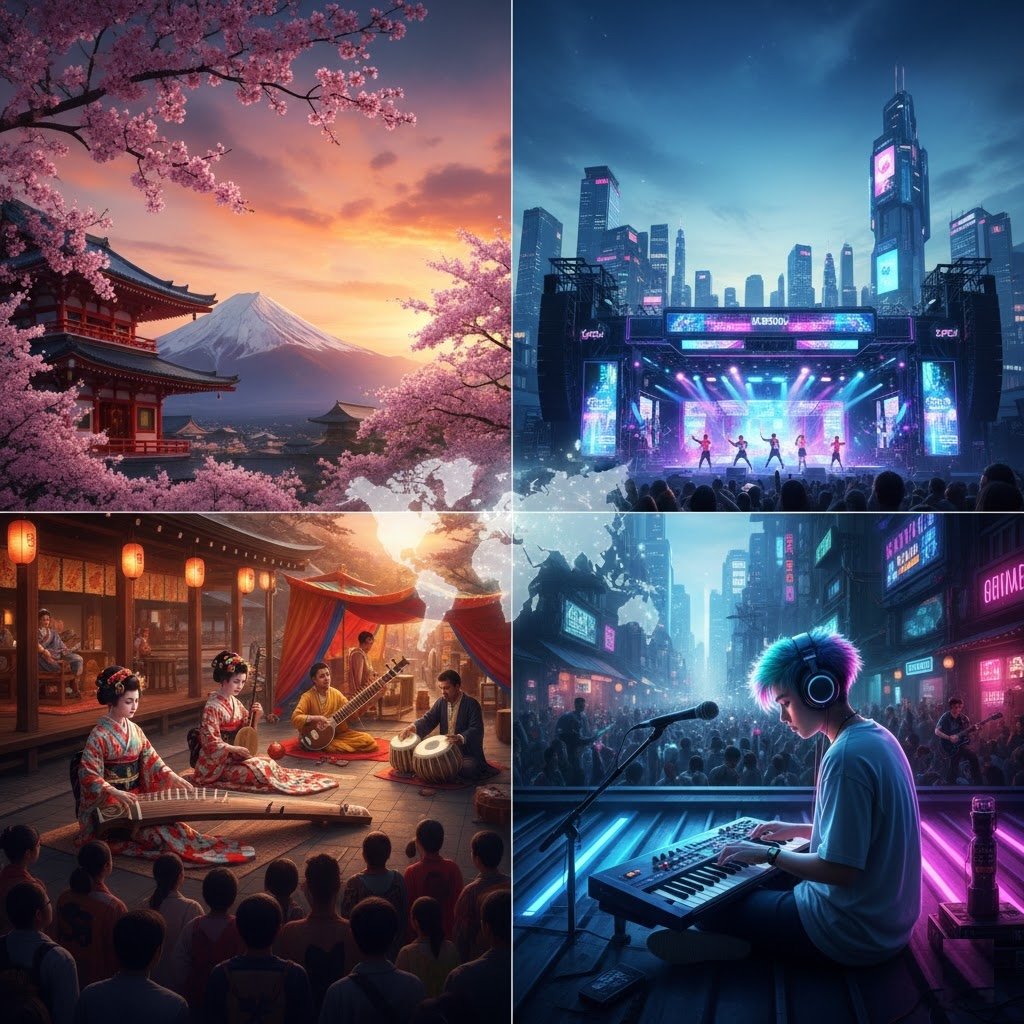
Asia is one of the most musically diverse regions on Earth — a vast landscape of ancient traditions, regional rhythms, and modern movements that continue to influence global sound. Listening in Asia means tuning into a continent where classical instruments meet electronic innovation, where folk traditions shape contemporary genres, and where cities pulse with creativity. From India’s classical ragas to Japan’s underground scenes, from Indonesia’s gamelan orchestras to Korea’s global pop wave, Asia offers a musical journey that spans centuries and cultures.
This guide explores the cultural roots and rising music movements that define Asia’s sound — and how travelers can experience them across the continent.
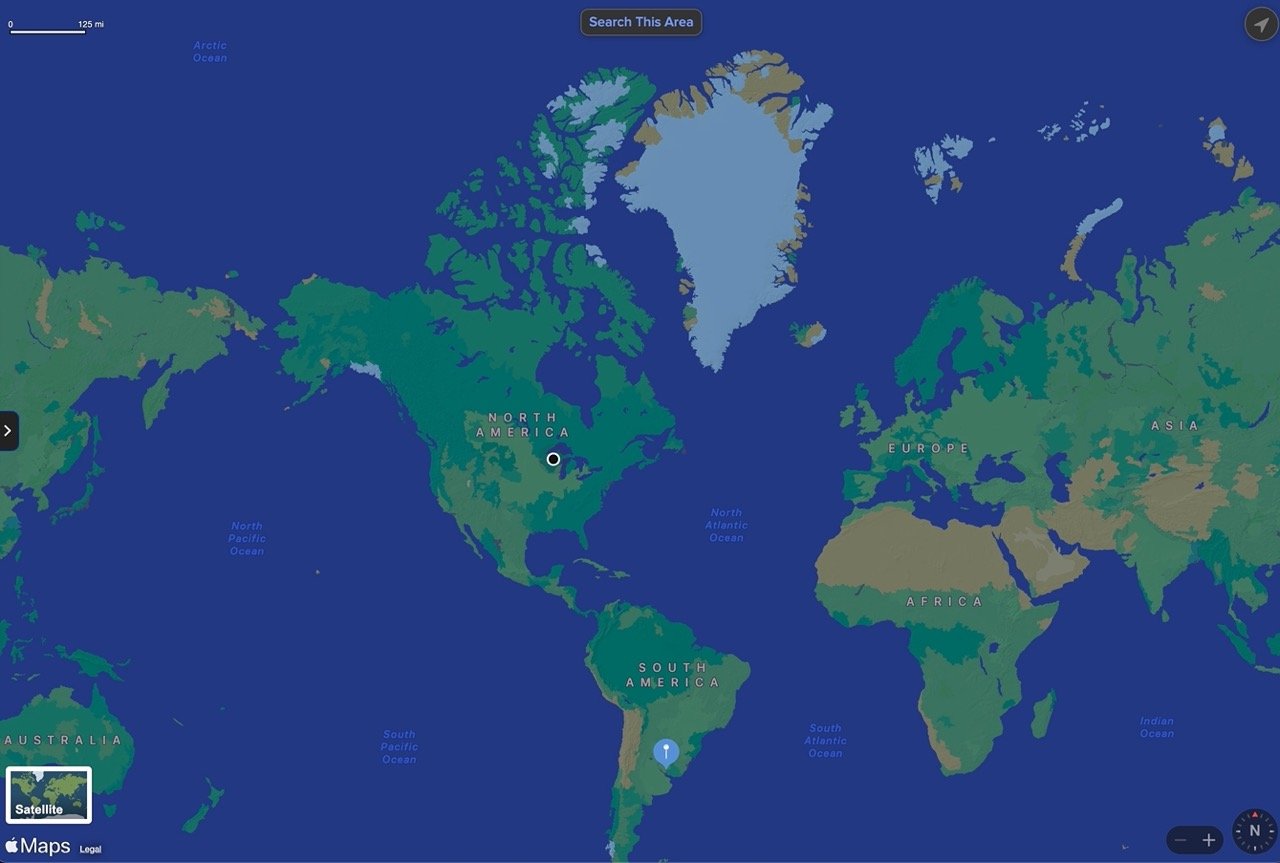
 DUCKDUCKGO MAPS
Asia
Maps are essential for visualizing location-based information. Explore the area related to "Asia" and find points of interest nearby.
A Continent of Deep Musical Heritage
Asia’s music is shaped by thousands of years of history, migration, and cultural exchange. Listening here means hearing:
- ancient classical systems
- regional folk traditions
- ceremonial and spiritual music
- modern pop and electronic scenes
- underground movements
- cross‑cultural fusion genres
Every region has its own musical identity, shaped by language, landscape, and community.
South Asia: Classical Traditions and Modern Fusion
South Asia — including India, Pakistan, Bangladesh, Nepal, and Sri Lanka — is home to some of the world’s oldest musical systems.
India: Ragas, Rhythms, and Cinematic Sound


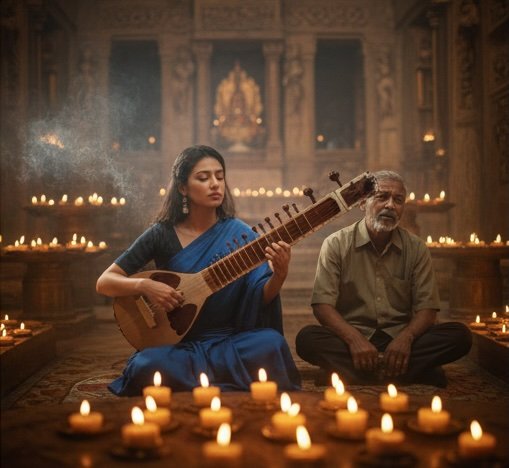
Indian classical music is built on ragas (melodic frameworks) and talas (rhythmic cycles). Instruments like the sitar, tabla, and sarod define its sound.
Modern India blends classical traditions with film music, indie scenes, and electronic experimentation.
Pakistan: Qawwali and Contemporary Expression
Qawwali, a devotional musical tradition, remains central to Pakistan’s cultural identity. The country also has thriving rock, pop, and fusion scenes shaped by both tradition and modernity.
Bangladesh and Nepal: Folk Roots and Modern Voices
Folk traditions — from Baul music to Himalayan chants — continue to influence contemporary artists across the region.
Listening in South Asia means hearing depth, emotion, and centuries of musical evolution.

East Asia: Innovation, Identity, and Global Influence
East Asia — including China, Japan, and Korea — blends ancient traditions with some of the world’s most influential modern genres.
China: Classical Instruments and Expanding Modern Scenes
Traditional Chinese music features instruments like the erhu, guzheng, and pipa.
Cities like Beijing, Shanghai, and Chengdu now host indie, electronic, and experimental scenes that continue to grow.
Japan: Tradition Meets Subculture
Japan’s music culture is famously diverse.
- Traditional styles include gagaku, taiko drumming, and folk songs.
- Modern scenes range from J‑pop and rock to ambient, jazz, and underground electronic movements.
Tokyo and Osaka remain global hubs for creative experimentation.
Korea: Global Pop and Deep Folk Roots
Korea’s traditional music — including pansori and folk percussion — remains influential.
Modern K‑pop, hip‑hop, and R&B have become global forces, shaping trends far beyond Asia.
Listening in East Asia means hearing innovation layered over deep cultural roots.
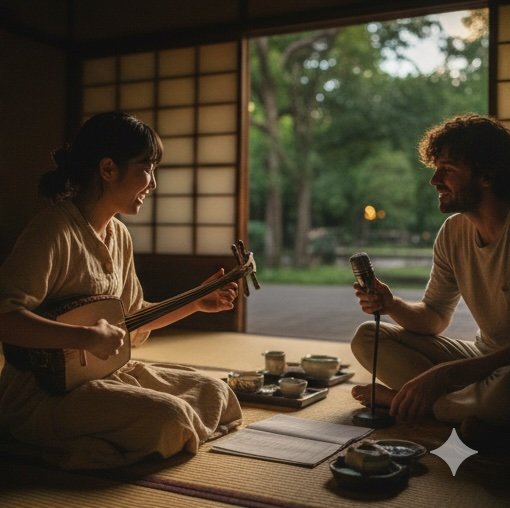
Southeast Asia: Rhythm, Ritual, and Modern Creativity
Southeast Asia — including Indonesia, Thailand, Vietnam, Malaysia, and the Philippines — offers a rich blend of ceremonial music, folk traditions, and rising contemporary scenes.
Indonesia: Gamelan and Island Rhythms
Gamelan orchestras, with their metallic tones and layered rhythms, are central to Indonesian culture.
Cities like Jakarta and Yogyakarta also host growing indie and electronic scenes.
Thailand and Vietnam: Folk Traditions and Modern Pop
Traditional instruments and regional melodies influence modern pop, rock, and electronic music across both countries.
The Philippines: Vocal Power and Global Influence
The Philippines is known for its strong vocal traditions, choral music, and modern pop scenes shaped by both local and global influences.
Listening in Southeast Asia means hearing rhythm, ceremony, and contemporary creativity.
Central Asia: Nomadic Traditions and Modern Revival
Central Asia — including Kazakhstan, Uzbekistan, Kyrgyzstan, and Mongolia — carries musical traditions shaped by nomadic life, storytelling, and spiritual expression.
Mongolia: Throat Singing and Steppe Rhythms
Mongolian throat singing, with its layered overtones, is one of the world’s most distinctive vocal traditions.
Horse‑head fiddles and steppe melodies reflect the region’s deep connection to nature.
Kazakhstan and Kyrgyzstan: Folk Instruments and Modern Fusion
Traditional instruments like the dombra and komuz remain central to cultural identity, while modern artists blend folk styles with rock, pop, and electronic music.
Listening in Central Asia means hearing the echoes of nomadic history.
The Rise of Modern Asian Music Movements
Asia is not only rooted in tradition — it’s shaping the future of global music.
Indie and Alternative Scenes
Cities like Seoul, Tokyo, Manila, Bangkok, and Jakarta have thriving indie scenes that blend local identity with global influences.
Electronic and Experimental Music
Asian producers and DJs are gaining international recognition for their innovative sound design and genre‑blending styles.
Cross‑Cultural Collaborations
Artists across Asia increasingly collaborate with musicians worldwide, creating fusion genres that reflect modern global identity.
Listening to modern Asia means hearing the future of music.
Why Listening in Asia Feels Like Exploring a Musical Universe
Asia’s music is shaped by:
- ancient traditions
- regional diversity
- cultural storytelling
- modern innovation
- global influence
- community expression
Listening across the continent means experiencing a soundscape that spans thousands of years and countless cultures.

 InternetMusicPlayer | ON THE GO
Making Music on a Train | There’s a Bit More Room
Train travel has its own rhythm — a steady pulse beneath your feet, a landscape sliding past the window, a sense of movement without the claustrophobia of air travel. For musicians, trains offer something rare:...
Frequently Asked Questions
What makes Asian music unique?
Its blend of ancient traditions, regional diversity, and modern innovation creates a sound found nowhere else.
Which Asian countries have the strongest music scenes?
India, Japan, Korea, China, Indonesia, and the Philippines each have influential and diverse music cultures.
Is Asian music only traditional?
No — Asia has thriving modern scenes including pop, hip‑hop, indie, electronic, and fusion genres.
Can travelers experience live music across Asia?
Absolutely — festivals, cultural events, and city venues offer countless opportunities.
What instruments are common in Asian music?
Sitar, tabla, erhu, guzheng, taiko drums, gamelan instruments, and many regional styles.
Are modern Asian genres globally influential?
Yes — K‑pop, J‑pop, Bollywood music, and Asian electronic scenes have global reach.
Do different regions of Asia have distinct musical identities?
Every region has its own traditions shaped by history, culture, and community.
Final Thoughts
Listening in Asia is a journey through cultural roots and rising music movements — a continent where ancient traditions meet modern creativity. From classical ragas to underground electronic scenes, from folk melodies to global pop waves, Asia offers a musical experience that feels both timeless and forward‑looking. Exploring these regions reveals how deeply music is woven into Asian identity, inviting listeners and travelers to experience the continent through its rhythms, stories, and evolving sound.
Africa | Europe | South America | North America | Asia | The Caribbean
The Middle East | Oceania | The United Kingdom