Travel changes everything — your schedule, your surroundings, your energy, your access to gear. And if you’re a musician, it changes your relationship with your instrument too.
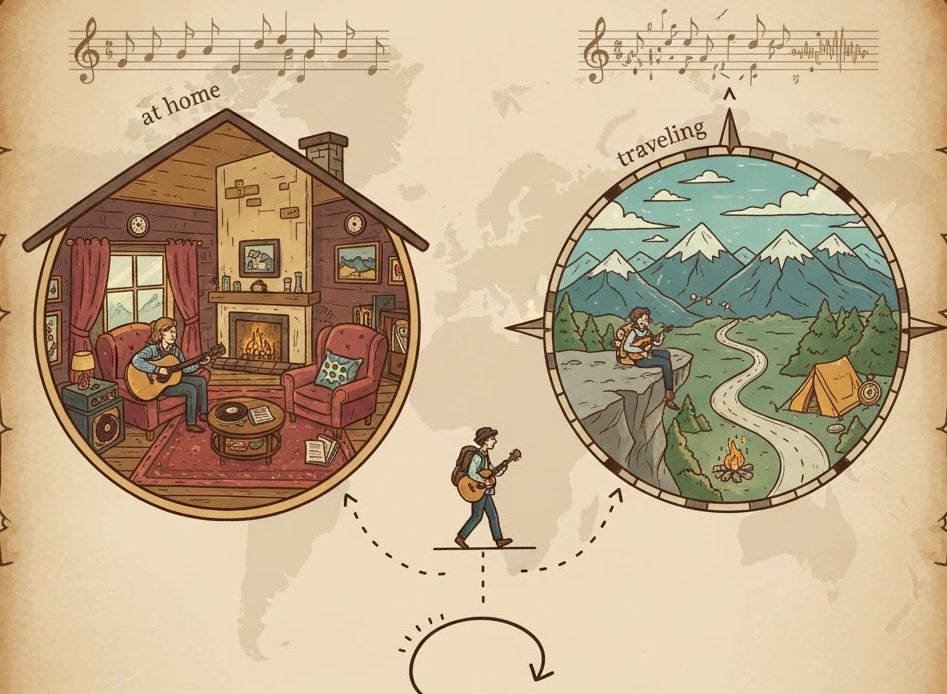
Playing music while traveling is not the same as at home, and that’s not a flaw. It’s simply a different creative environment with different rules, different limitations, and different opportunities.
This guide is for musicians who want to stay connected to their craft on the road — whether you’re traveling for work, vacation, family, or long‑term wandering. You don’t need a full studio, a quiet room, or your entire gear collection. You just need intention, flexibility, and a setup that works with your reality instead of against it.
Why Playing Music on the Road Feels Different
At home, you have routines. You have your favorite chair, your preferred lighting, your go‑to gear, your familiar acoustics.
On the road, everything shifts:
- unpredictable schedules
- unfamiliar spaces
- limited gear
- noise you can’t control
- fatigue from transit
- emotional overstimulation
- lack of privacy
Travel disrupts your creative muscle memory. But disruption isn’t the enemy — it’s an invitation to adapt.
The Mindset Shift: From “Perfect Conditions” to “Possible Conditions”
The biggest mistake musicians make while traveling is trying to recreate their home setup exactly.
You can’t.
And you don’t need to.
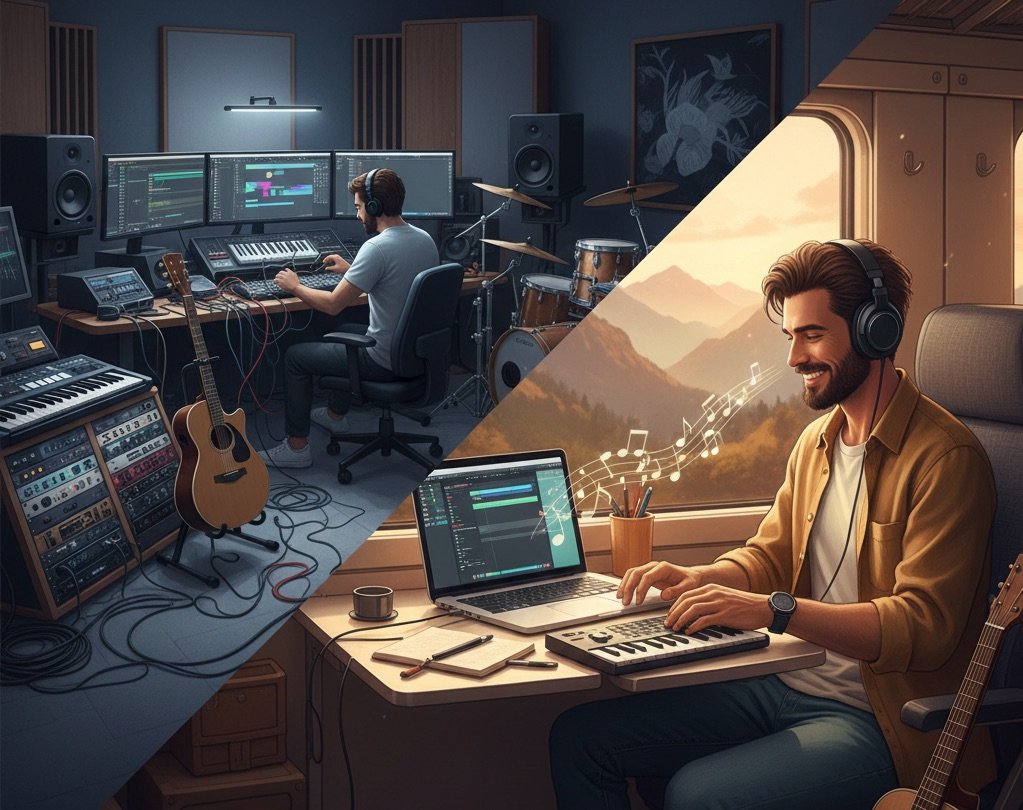
Travel music is about possibility, not perfection.
It’s about:
- shorter sessions
- lighter gear
- flexible expectations
- creative improvisation
- using what you have, not what you wish you had
Once you stop comparing your travel output to your home output, everything becomes easier.
Build a Travel‑Friendly Music Routine
You don’t need a strict schedule — you need a rhythm that fits the trip.
Anchor your practice to moments, not times
Instead of “I’ll practice at 7 PM,” try:
- after breakfast
- during layovers
- before bed
- while waiting for laundry
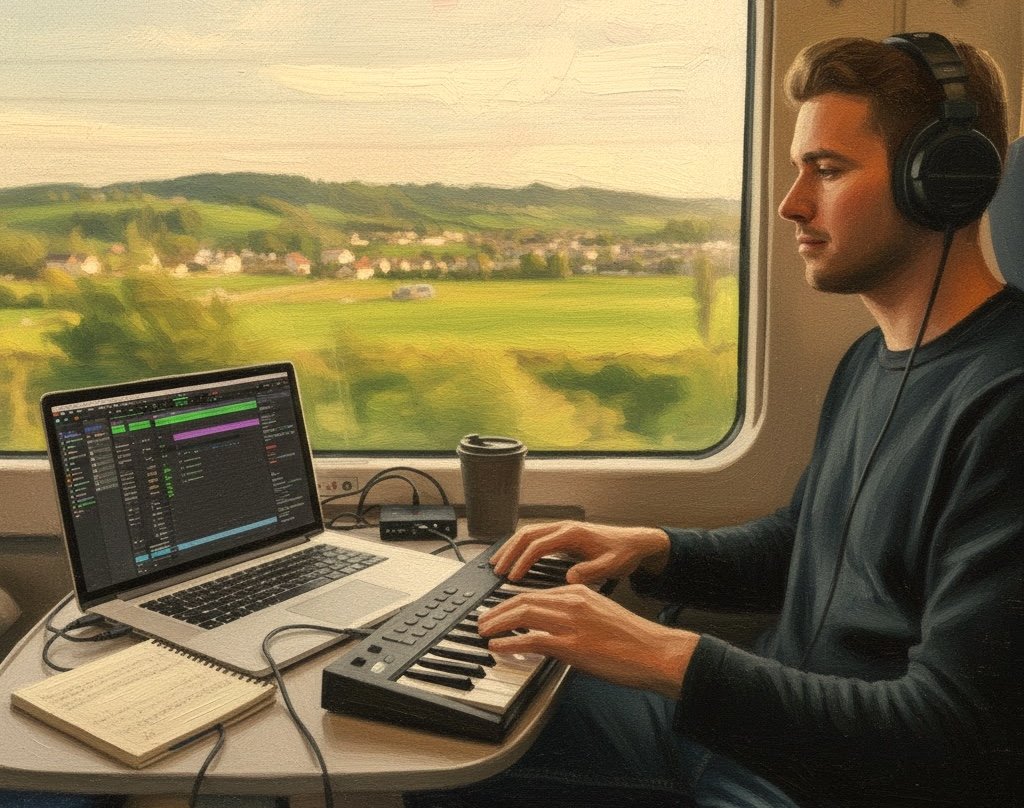
- during long train rides
Travel is unpredictable. Anchoring to moments keeps your routine alive.
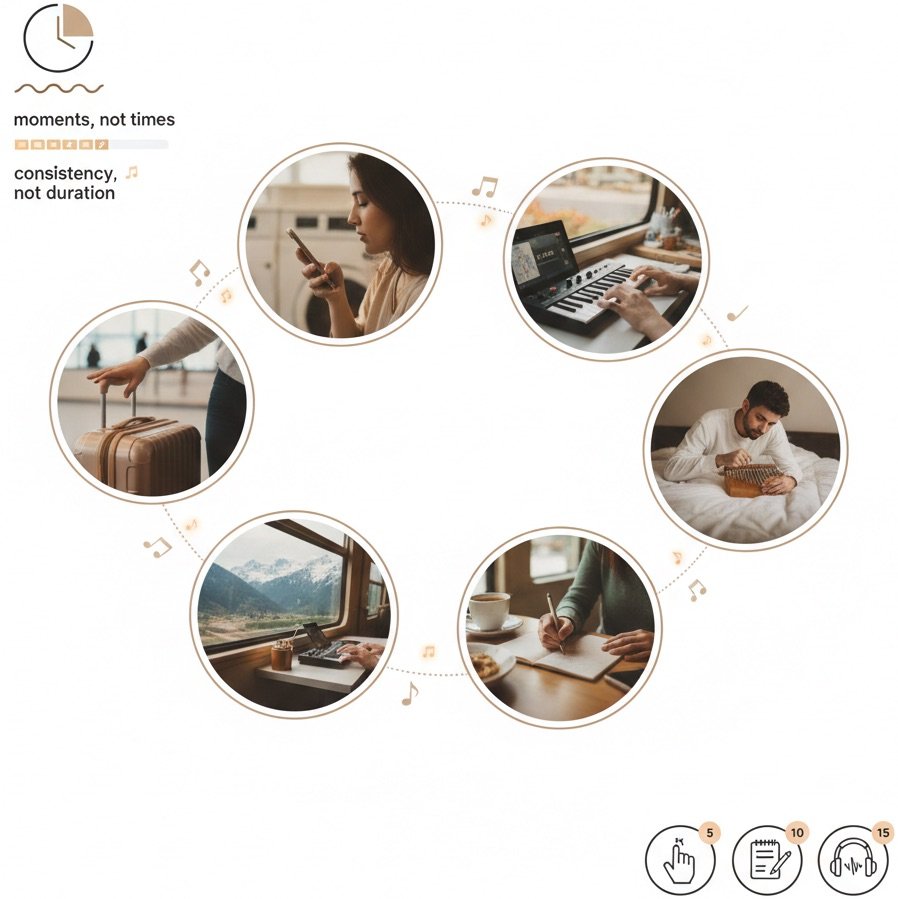
Aim for consistency, not duration
Ten minutes a day on the road is worth more than an hour once a week.
Use micro‑sessions
Short bursts of creativity keep your musical brain active:
- 5‑minute scale warmups
- 10‑minute chord cycles
- 15‑minute beat sketches
- 20‑minute lyric freewrites
Travel rewards small, steady habits.
Choose Gear That Works Anywhere
You don’t need to bring everything. You need to bring the right things.
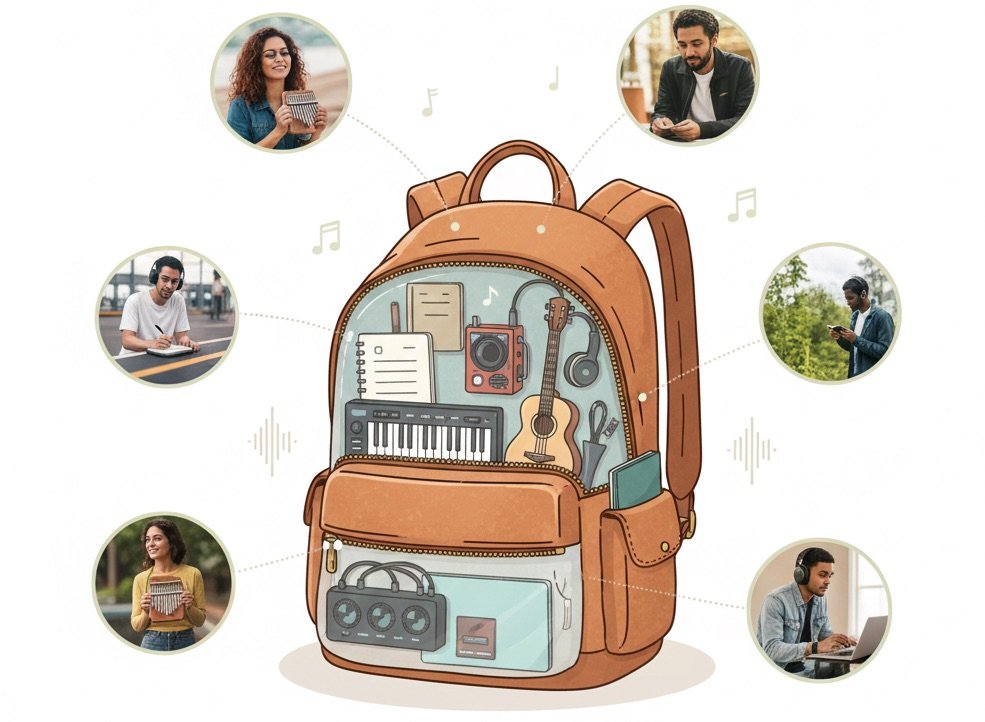
Portable instruments that travel well
- travel guitars
- ukuleles
- harmonicas
- pocket synths
- kalimbas
- flutes and whistles
- compact MIDI controllers
These instruments fit in backpacks, hotel rooms, and quiet corners of airports.
Digital tools that shrink your setup
- mobile DAWs
- sample packs
- loopers
- headphone amps
- compact audio interfaces
- noise‑isolating headphones
Your phone or tablet can become a full creative workstation.
Protect your gear
Travel is rough. Use:
- padded cases
- humidity packs
- cable organizers
- microfiber cloths
- hard‑shell protection for fragile instruments
Your gear should survive the journey as well as you do.
Find Spaces That Support Creativity
You won’t always have a quiet room — but you can find pockets of creative space anywhere.
In hotels
- corners of the room
- near windows
- inside closets for vocal isolation
- bathrooms for natural reverb
In transit
- airport lounges
- train seats
- long flights
- ferry decks
- rental cars (parked!)

Outdoors
- parks
- beaches
- rooftops
- quiet trails
- lakesides
Travel gives you soundscapes you’d never get at home.
Use Travel to Expand Your Musical Vocabulary
Travel exposes you to new rhythms, languages, textures, and atmospheres.
Let them influence your playing.
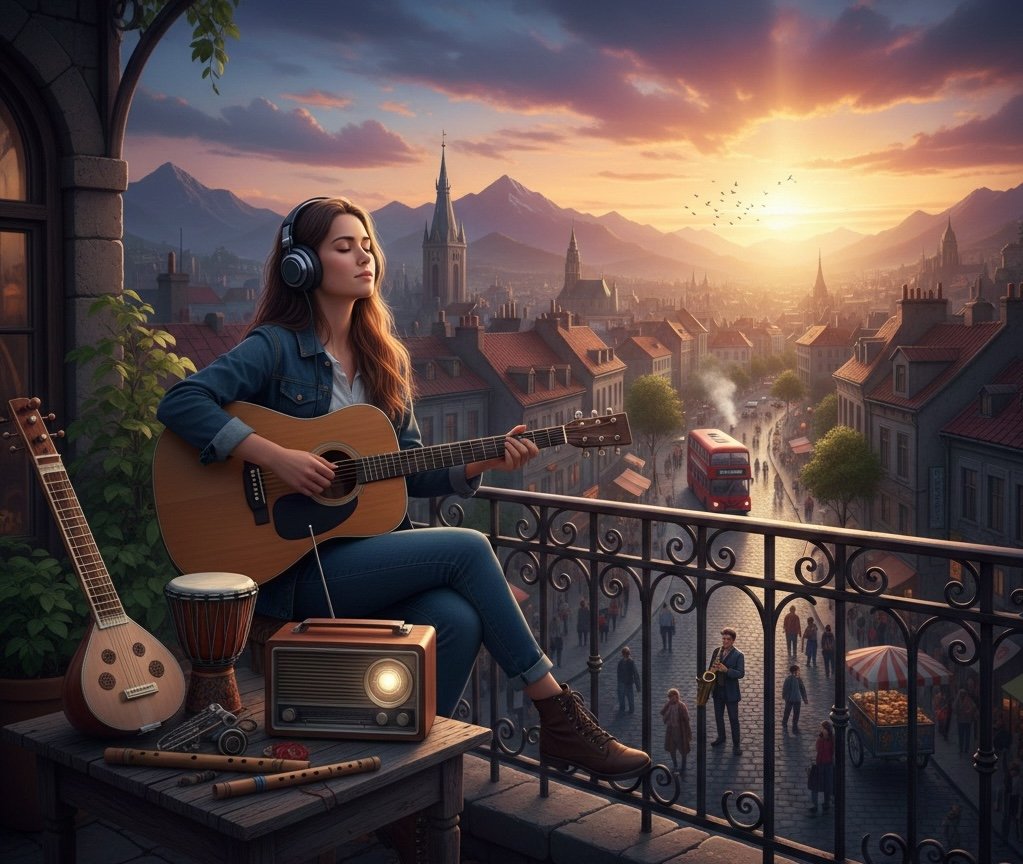
Listen intentionally
- street musicians
- local radio
- regional instruments
- ambient city noise
- natural soundscapes
Collect ideas
Use your phone to capture:
- voice memos
- rhythm patterns
- lyric fragments
- melodic sketches
- environmental sounds
Travel is a creative archive waiting to be documented.
Accept Imperfection — It’s Part of the Journey
Travel music is messy.
You’ll have days when you’re tired, distracted, or uninspired.
You’ll have sessions interrupted by noise, schedules, or people.
That’s okay.
The goal isn’t to produce your best work.
The goal is to stay connected to your craft — to keep the thread alive until you’re home again.

 InternetMusicPlayer | DESTINATIONS
Listening in North America | Genres Born Across a Continent
Listening in North America means tuning into the places that gave rise to blues, jazz, country, hip‑hop, rock, folk, bluegrass, Tejano, and dozens of other influential styles. From the Mississippi Delta to the streets of...
Frequently Asked Questions
Why is it harder to play music while traveling?
Because travel disrupts your routines, environment, and access to gear — all of which affect creativity.
How can I stay consistent on the road?
Use short sessions, flexible routines, and portable gear that fits your travel lifestyle.
Do I need special travel instruments?
Not necessarily, but compact or durable instruments make the process easier and more enjoyable.
Can I practice in hotels without disturbing people?
Yes — with headphones, quiet instruments, or by using soft‑touch techniques and choosing times when noise is less noticeable.
Is it worth making music even if it’s only for a few minutes?
Absolutely. Small, steady sessions keep your skills sharp and your creativity active.
How do I stay inspired while traveling?
Pay attention to new sounds, environments, and cultural influences — travel is full of creative fuel.
What if I can’t bring any instruments?
Use mobile apps, voice memos, rhythm tapping, or lyric writing. You can stay musical without gear.
Final Thoughts
Playing music while traveling is not the same as at home — but that’s the beauty of it.
Travel forces you to adapt, simplify, and rediscover your craft in new ways. It teaches flexibility, presence, and creative resilience. It reminds you that music isn’t tied to a room, a setup, or a routine. It’s tied to you.
When you embrace the differences instead of fighting them, travel becomes one of the most inspiring creative environments you’ll ever experience.