Train travel has its own rhythm — a steady pulse beneath your feet, a landscape sliding past the window, a sense of movement without the claustrophobia of air travel. For musicians, trains offer something rare: space. Not a studio’s worth, but enough to stretch out, breathe, and create.
Making music on a train is one of the most enjoyable ways to stay creative on the road, especially when you’re lucky enough to get your own car or a quiet section of the carriage.
This guide explores how to turn train travel into a mobile creative session — whether you’re writing lyrics, producing beats, recording textures, or simply letting the motion of the rails spark new ideas.
Why Trains Are Surprisingly Great for Music Creation
Trains give you a blend of freedom and structure that’s hard to find anywhere else.
You get:
- more elbow room than planes
- a table or tray for gear
- access to outlets on many routes
- the ability to stand, stretch, or move
- natural light from wide windows
- a rhythmic backdrop that inspires ideas
And unlike cars, you’re not driving. You’re free to sink into your creative world.
Set Up a Comfortable Creative Workspace
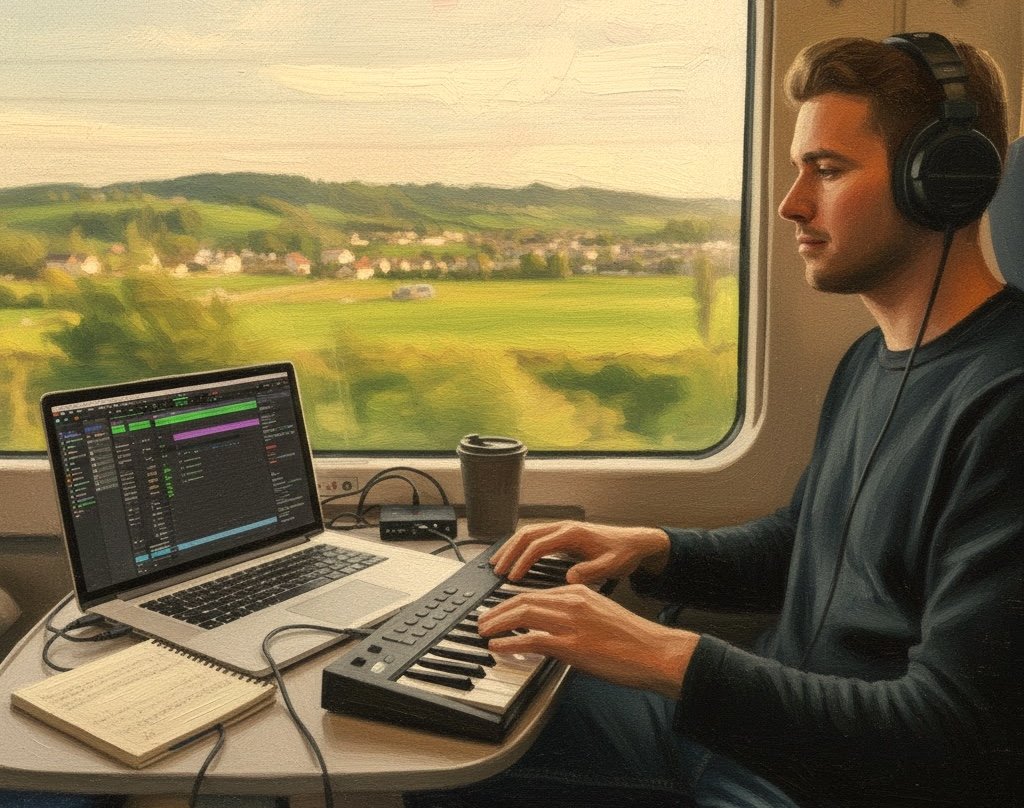
Even in standard seating, trains give you enough room to build a small, functional setup.
Use the table or tray as your “studio desk”
Perfect for:
- laptops
- tablets
- small MIDI controllers
- portable samplers
- notebooks
- pocket synths
If you get your own car or a quiet booth, you can spread out even more.
Choose a window seat when possible
It gives you:
- privacy
- a wall to lean on
- fewer interruptions
- visual inspiration
The scenery becomes part of your creative process.
Bring a Travel‑Friendly Gear Kit
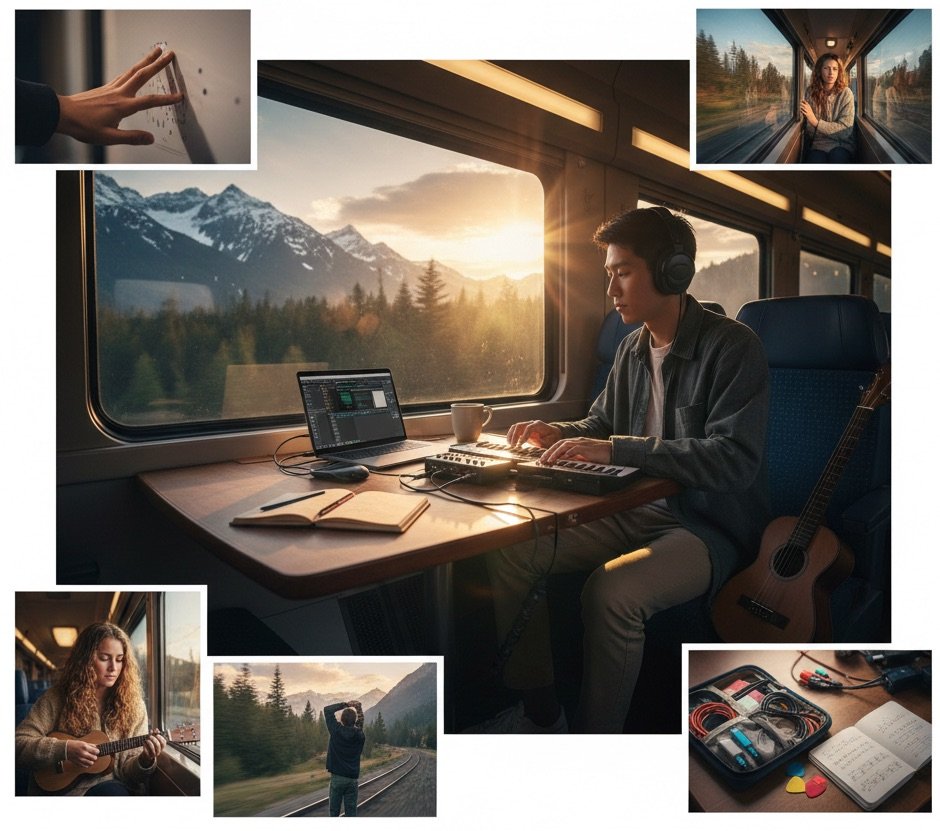
You don’t need much — just the essentials that help you stay in flow.
Great gear for trains
- laptop or tablet
- noise‑isolating headphones
- compact MIDI controller
- pocket synth (Volca, OP‑Z, etc.)
- portable sampler
- small audio interface
- notebook + pen
- cable organizer
Ultra‑minimal setup
If you want to travel light:
- phone
- earbuds
- one music app
- a small notebook
Trains reward simplicity.
Use the Train’s Rhythm as Creative Fuel
Trains have a natural tempo — a steady, hypnotic pulse that can shape your music.
Try:
- tapping rhythms that match the track
- building beats around the train’s cadence
- humming melodies that follow the motion
- using the landscape as emotional inspiration
Movement changes how you think. Let it guide your ideas.
Take Advantage of the Extra Space
Unlike planes, trains give you room to move your hands, stretch your arms, and shift your posture.
What you can do on a train that’s harder in the air
- finger‑style practice on a travel guitar
- quiet ukulele or kalimba playing
- small percussion exercises
- two‑handed MIDI controller work
- sketching chord shapes
- writing lyrics comfortably
Sometimes you even get your own car — a rare gift for any traveling musician.
Use Field Recordings to Capture the Journey
Trains are full of rich, textured sounds:
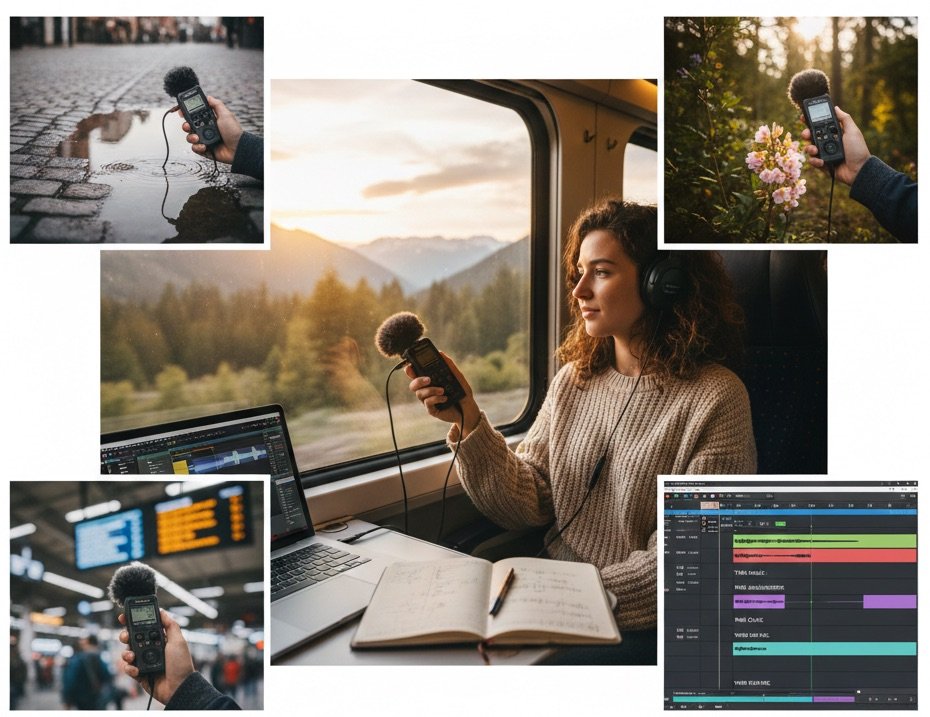
- the clack of the rails
- the low rumble of the engine
- station announcements
- door chimes
- wind rushing past
- conversations in the distance
Record them (discreetly) and use them as:
- ambient beds
- percussive layers
- rhythmic loops
- atmospheric intros
A single train ride can become an entire sample pack.
Build a “Train Mode” Workflow
Long stretches of uninterrupted time are perfect for focused creative sessions.
Try these workflows
- Beat sketching: 8–16 bar loops
- Lyric writing: stream‑of‑consciousness journaling
- Melody exploration: humming into voice memos
- Sample chopping: offline sound design
- Arrangement drafts: rough song structures
- DJ prep: playlist curation, transitions, cue points
- Instrument practice: quiet, controlled exercises
Trains are ideal for creative exploration, not perfection.
Use the Changing Landscape as Creative Inspiration
The scenery outside your window becomes part of the writing process.
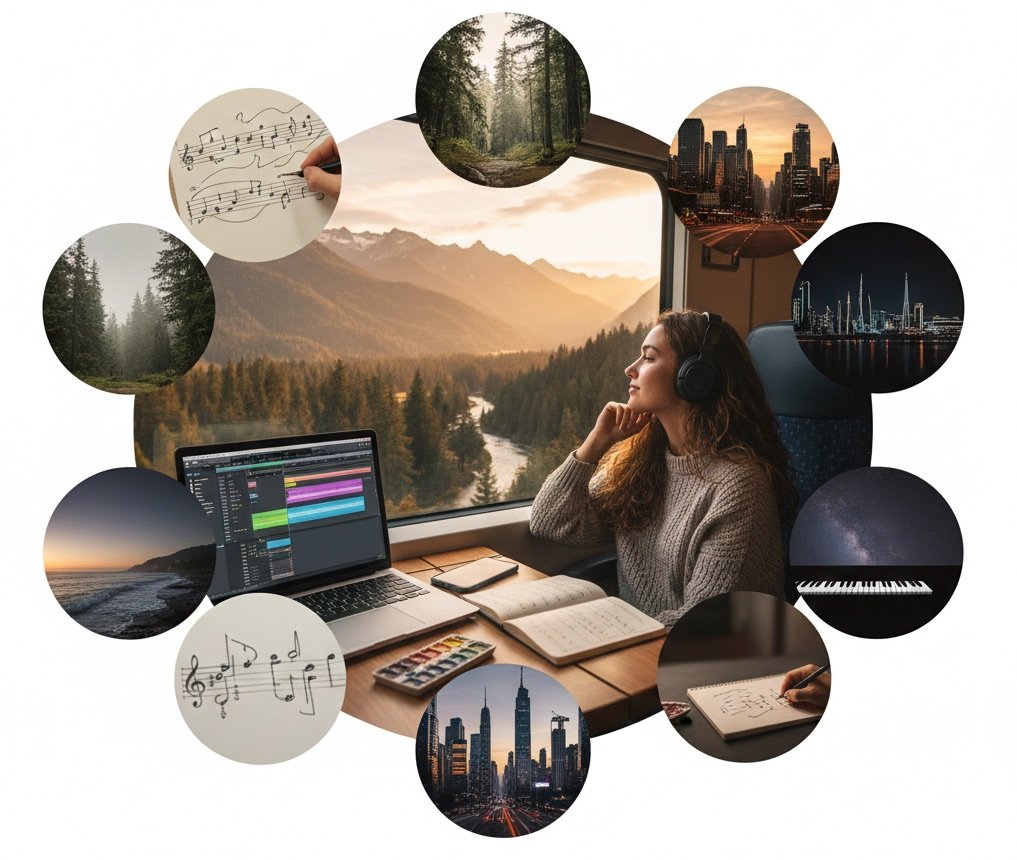
Let the visuals influence your sound
- mountains = slow, expansive chords
- cities = sharp rhythms and textures
- forests = organic, flowing melodies
- coastlines = airy pads and open intervals
- night travel = minimal, introspective ideas
Trains give you a moving mood board.
Protect Your Gear and Your Space
Trains can be bumpy, so prepare accordingly.
Tips
- keep drinks away from electronics
- use a padded case for instruments
- secure cables so they don’t snag
- keep your bag under the seat for quick access
- use a microfiber cloth for screens and keys
A little care goes a long way.

 InternetMusicPlayer | DESTINATIONS
Listening in the Caribbean | Islands That Shaped Iconic Sounds
Listening in the Caribbean is more than hearing music — it’s experiencing the places, people, and stories that shaped genres recognized around the world. From reggae and dancehall to soca, calypso, zouk, and beyond, the...
Frequently Asked Questions
Is it practical to make music on a train?
Yes — trains offer more space, stability, and comfort than most travel environments.
What gear works best on trains?
Laptops, tablets, small MIDI controllers, portable samplers, and compact instruments.
Can I record sounds on a train?
Absolutely — trains are full of unique textures perfect for sampling.
Is it okay to play instruments on a train?
Quiet, unobtrusive instruments (kalimba, ukulele, pocket synths) are usually fine if you’re respectful.
How do I stay inspired during long rides?
Use the scenery, the rhythm of the tracks, and the stillness of travel to spark ideas.
What if the train is crowded?
Switch to a minimal setup: phone, earbuds, and a notebook.
Is a private car really that useful?
Yes — it gives you space to spread out gear, practice more freely, and sink deeper into creative flow.
Final Thoughts
Making music on a train is one of the most enjoyable ways to stay creative while traveling.
You get space, movement, rhythm, scenery, and a sense of freedom that’s hard to find anywhere else. Whether you’re producing beats, writing lyrics, practicing quietly, or capturing field recordings, trains offer a unique creative environment that blends motion with focus.
Sometimes you even get your own car — and when you do, it feels like a rolling studio built just for you.