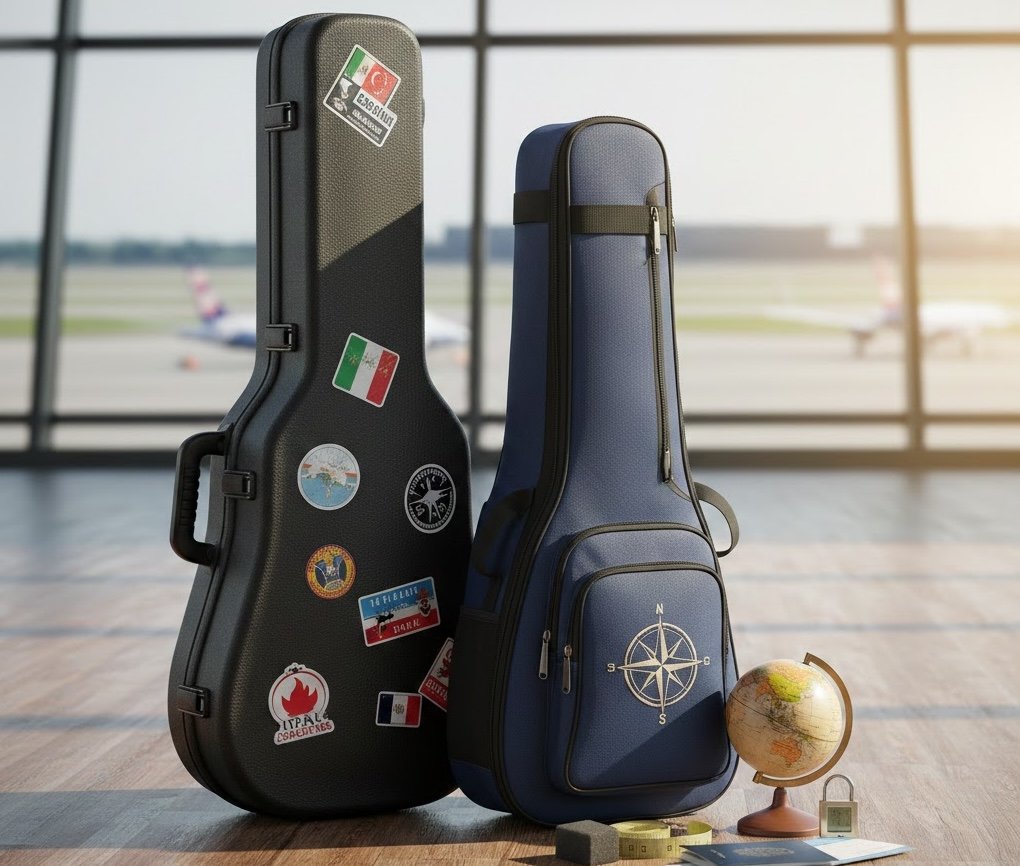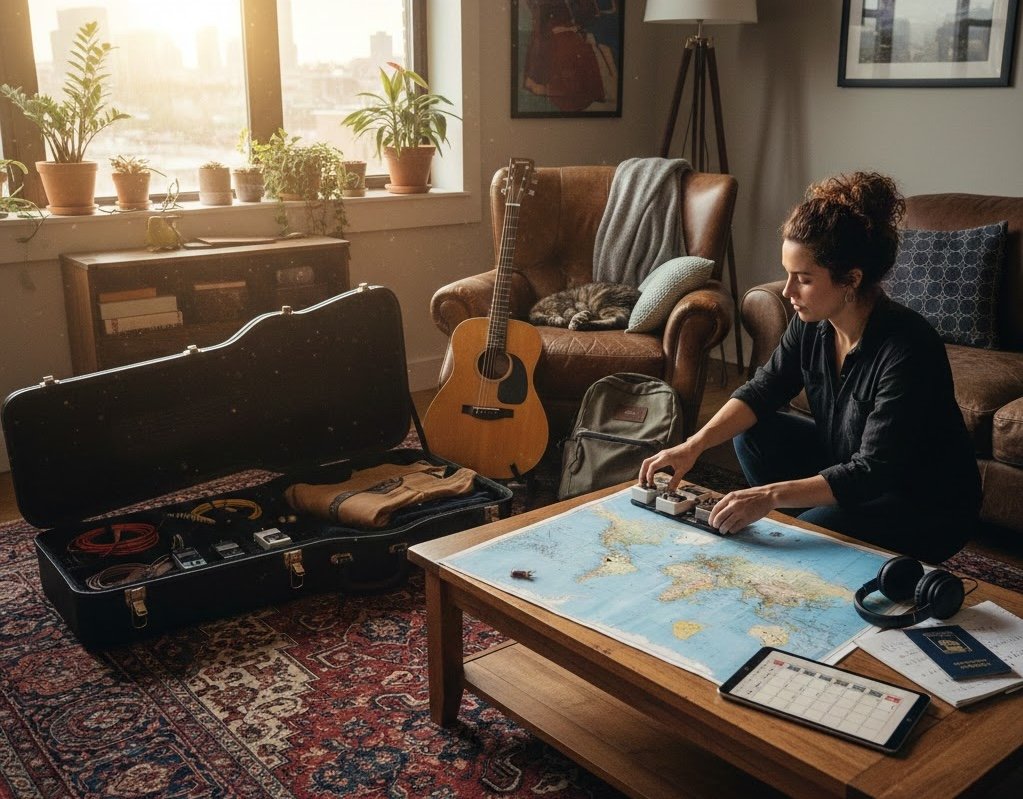
Traveling as a musician isn’t just about packing your gear — it’s about preparing your creative life for movement. Whether you’re heading out for a weekend getaway, a long international trip, or a slow‑travel adventure, the way you plan ahead determines how smoothly your music fits into the journey. Musician trip preparations help you stay inspired, organized, and ready for anything, without stress or last‑minute scrambling.
This guide explores the essential steps musicians should take before traveling — from choosing the right gear to testing your setup, organizing your creative tools, and preparing for the unexpected.
Why Preparation Matters for Traveling Musicians
Travel introduces variables you can’t control — climate, space, noise, schedules, and access to power or Wi‑Fi. Preparation helps you:
- avoid damage to instruments
- stay productive on the go
- reduce stress and decision fatigue
- protect your creative work
- adapt to unpredictable environments
- stay inspired instead of overwhelmed
Good preparation turns travel into a creative opportunity, not a disruption.
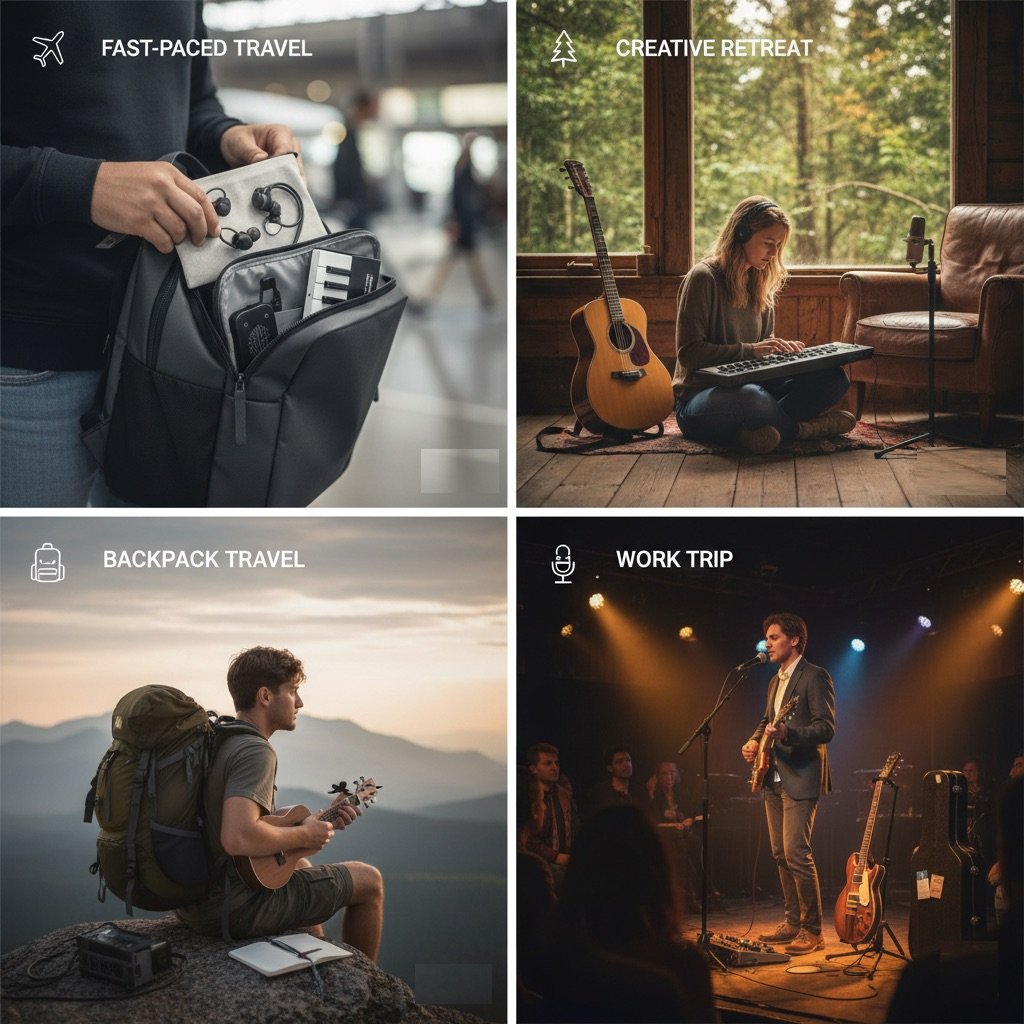
1. Choose the Right Gear for the Trip You’re Taking
Not every trip requires the same setup. Before packing, ask yourself:
What kind of trip is this?
- fast‑paced travel
- slow exploration
- work trip
- vacation
- creative retreat
How much space will I have?
- carry‑on only
- backpack travel
- checked luggage
- road trip
What’s the purpose of bringing gear?
- practice
- composition
- recording
- performance
- creative play
Your answers determine whether you bring a full travel instrument, a pocket‑sized tool, or just your phone and earbuds.

2. Test Your Travel Setup Before You Leave
Never take untested gear on a trip. What works at home may fail in a café, airport, or hotel room.
Do a “local test run”
Take your minimalist kit to:
- a park
- a coffee shop
- a library
- a friend’s house
- your backyard
What to test
- comfort
- noise levels
- battery life
- portability
- workflow
- how quickly you can set up and pack down
If something feels awkward or unnecessary, adjust before you travel.
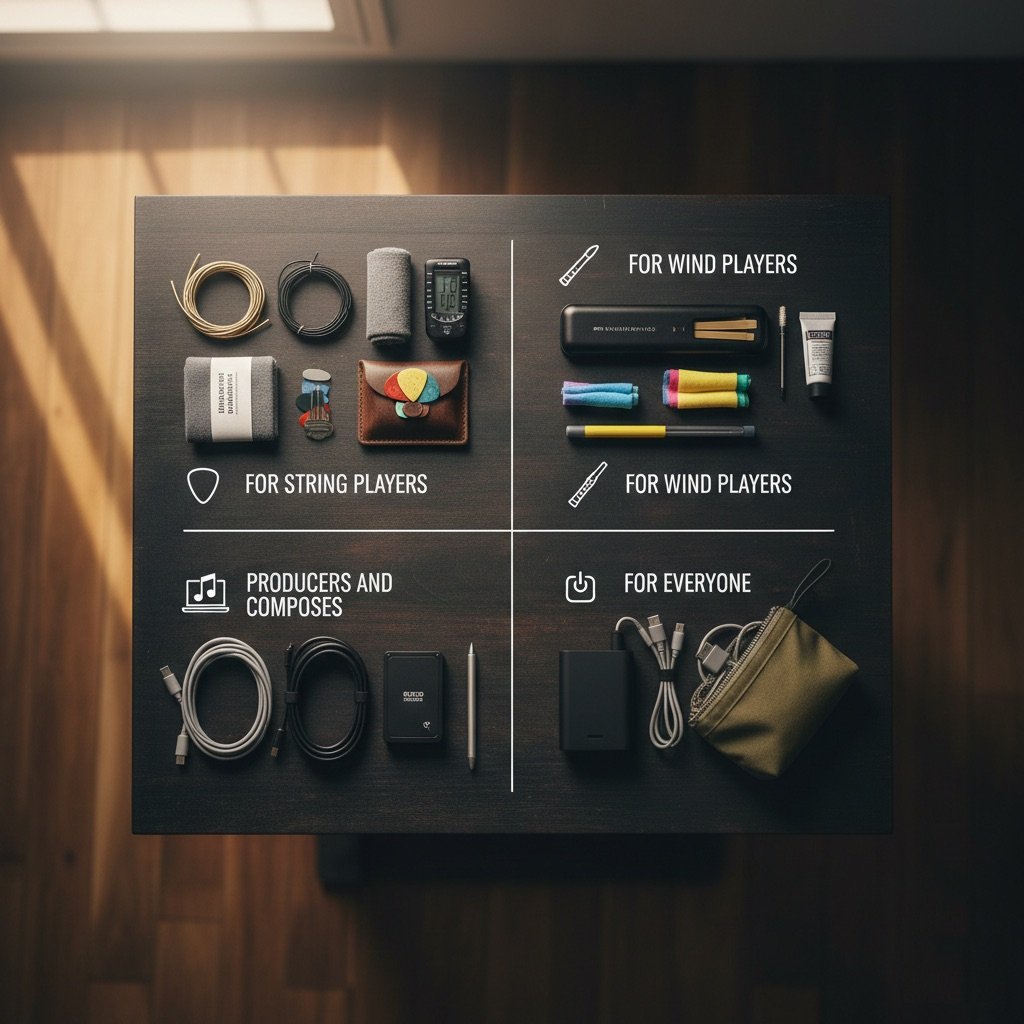
3. Prepare Your Consumables and Accessories
Small items can make or break your trip.
For string players
- extra strings
- microfiber cloth
- small tuner
- picks or finger tools
For wind players
- extra reeds
- cleaning swabs
- cork grease
- reed case
For producers and composers
- spare cables
- adapters
- stylus or pencil
- backup storage
For everyone
- power bank
- charging cables
- small pouch for organization
Consumables are cheap and light — pack more than you think you’ll need.
4. Protect Your Instrument From Climate Changes
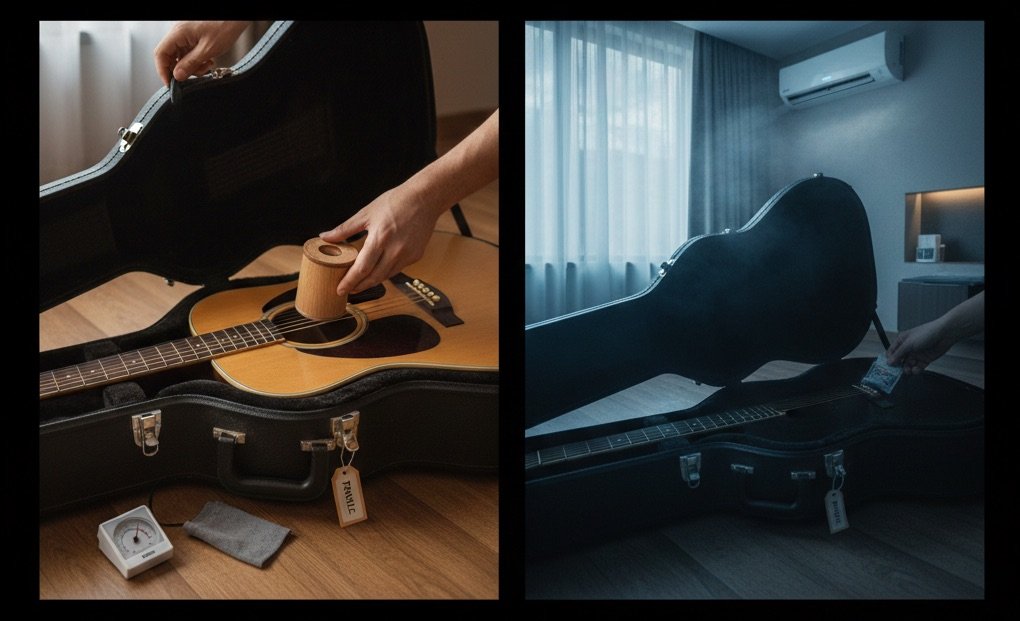
Travel exposes instruments to humidity, dryness, and temperature swings.
Before you leave
- check your instrument’s condition
- tighten or loosen strings as needed
- add a humidifier or desiccant pack
- choose the right case (hard, soft, or hybrid)
During travel
- avoid leaving instruments in cars
- let instruments acclimate before playing
- store them away from heaters or AC vents
A little climate awareness prevents cracks, warping, and tuning instability.
5. Back Up Everything — Twice
Your creative work is just as important as your gear.
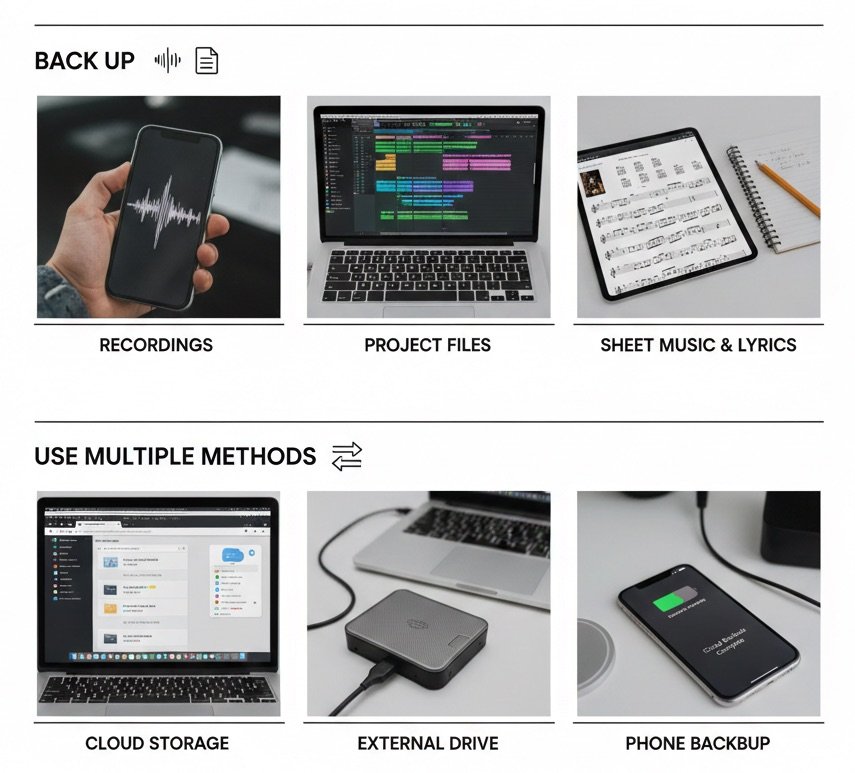
Back up
- recordings
- voice memos
- project files
- sheet music
- lyrics
- samples
- presets
Use multiple methods
- cloud storage
- external drive
- phone backup
If your device is lost or damaged, your ideas stay safe.
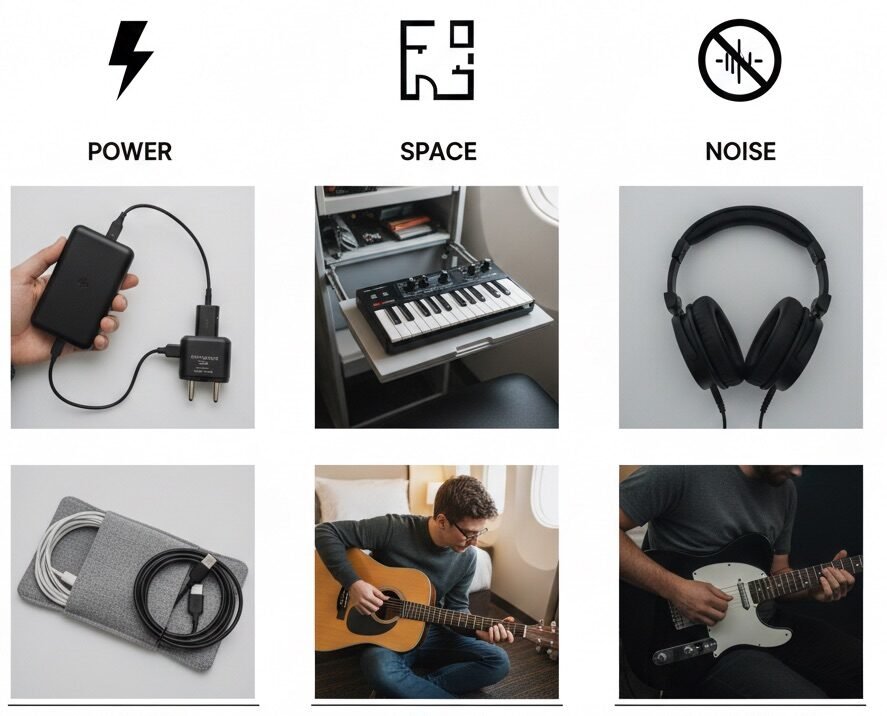
6. Plan for Power, Space, and Noise
Travel environments are unpredictable — prepare for the realities of where you’ll be working.
Power
- bring a small power bank
- pack a universal adapter for international trips
- keep cables in one pouch
Space
- choose gear that works in tight spaces
- practice setting up in small areas
Noise
- bring earbuds or closed‑back headphones
- consider a quiet practice tool
- use soft instruments when needed
Preparation helps you adapt to any environment.
7. Create a Travel‑Friendly Workflow
Your workflow should be simple, flexible, and portable.
Before you leave
- organize your apps
- create templates in your DAW
- set up folders for new ideas
- pack a small notebook for sketches
During travel
- capture ideas quickly
- review them at night
- refine them when you have time
Travel is for sketching — polishing can happen later.

8. Prepare Mentally for a Different Creative Rhythm
Travel changes your routine — and that’s okay.
Expect
- shorter sessions
- spontaneous inspiration
- unpredictable schedules
- bursts of creativity
Embrace
- new sounds
- new environments
- new rhythms
- new perspectives
Travel isn’t about replicating your home studio — it’s about expanding your creative world.

 InternetMusicPlayer | INSPIRATION
Listening to the World | A Musicians Guide to Creative Travel
Music is one of the most universal languages on Earth — a force that connects cultures, tells stories, and reveals the soul of a place. Listening to Music Around the World is more than exploring...
Frequently Asked Questions
How much gear should I bring on a trip?
Only what you’ll actually use — aim for one small pouch of essentials.
Do I need a travel instrument?
Not always, but it helps keep your hands active and your creativity flowing.
How do I protect my instrument on flights?
Use a hybrid or hard case, loosen strings, and keep it in the cabin when possible.
What’s the smallest possible travel setup?
A phone, earbuds, and a notes app.
How do I stay creative while traveling?
Keep your tools accessible, capture ideas quickly, and embrace short sessions.
Should I bring my main instrument?
Only if it’s durable, insured, and necessary for the trip.
Final Thoughts
Musician trip preparations are about more than packing gear — they’re about setting yourself up for a creative, stress‑free journey. With the right planning, your instrument becomes a companion instead of a burden, and your travel becomes a source of inspiration instead of interruption. By choosing the right tools, testing your setup, protecting your instrument, and preparing your workflow, you can make music anywhere your travels take you.