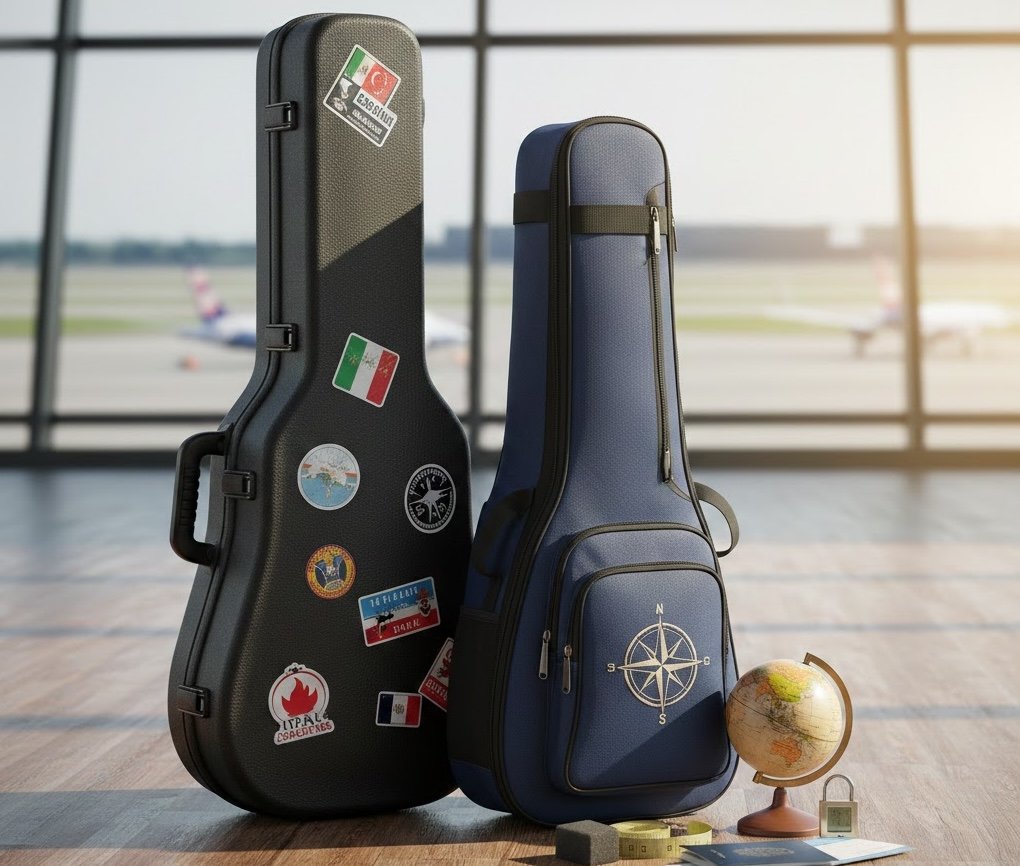
When you’re traveling with an instrument — whether it’s a compact travel guitar, a pocket synth, a flute, or a tiny kalimba — the case you choose matters just as much as the instrument itself. A great travel‑friendly case protects your gear from bumps, climate changes, and unpredictable environments while keeping your setup lightweight and easy to carry. A bad case adds stress, bulk, and unnecessary risk.
Travel‑friendly instrument cases are about balance: protection without weight, structure without rigidity, and portability without compromise. This guide explores the important factors musicians should consider when choosing a case that can handle airports, buses, trains, and everyday movement.
Why Your Case Matters More When You Travel

At home, your instrument lives in a controlled environment. On the road, it faces:
- temperature swings
- humidity changes
- rough handling
- crowded spaces
- overhead bins
- long walks
- unpredictable weather
A travel‑friendly case becomes your instrument’s first line of defense — and your peace of mind.
Hard Case vs. Soft Case vs. Hybrid Case
Each type of case has strengths and weaknesses. The right choice depends on your travel style.
Hard Cases
Best for: flights, long trips, fragile instruments
Strengths:
- maximum protection
- rigid shell
- impact resistance
- stable in overhead bins
Weaknesses:
- heavy
- bulky
- less comfortable to carry
Hard cases are ideal when you need absolute protection — but they’re not always practical for daily movement.
Soft Cases (Gig Bags)
Best for: daily travel, walking, commuting
Strengths:
- lightweight
- comfortable straps
- flexible storage
- easy to carry
Weaknesses:
- less impact protection
- vulnerable to crushing
- not ideal for flights
Soft cases shine when mobility matters more than maximum protection.
Hybrid Cases
Best for: musicians who want both protection and portability
Strengths:
- rigid internal structure
- padded exterior
- lighter than hard cases
- more protective than soft cases
Weaknesses:
- slightly bulkier than gig bags
- more expensive
Hybrid cases are the sweet spot for most traveling musicians.

Important Factors to Consider When Choosing a Travel Case
Below are the key elements that determine whether a case is truly travel‑friendly.
1. Weight and Portability
A case should make travel easier, not harder.
Look For
- lightweight materials
- ergonomic handles
- comfortable backpack straps
- slim profile
If the case feels heavy when empty, it will feel unbearable when full.
2. Protection and Padding
Protection is the core purpose of a case — but not all padding is equal.
Look For
- dense foam padding
- reinforced edges
- shock‑absorbing materials
- internal neck or body support (for guitars and strings)
The goal is to protect against drops, bumps, and pressure.
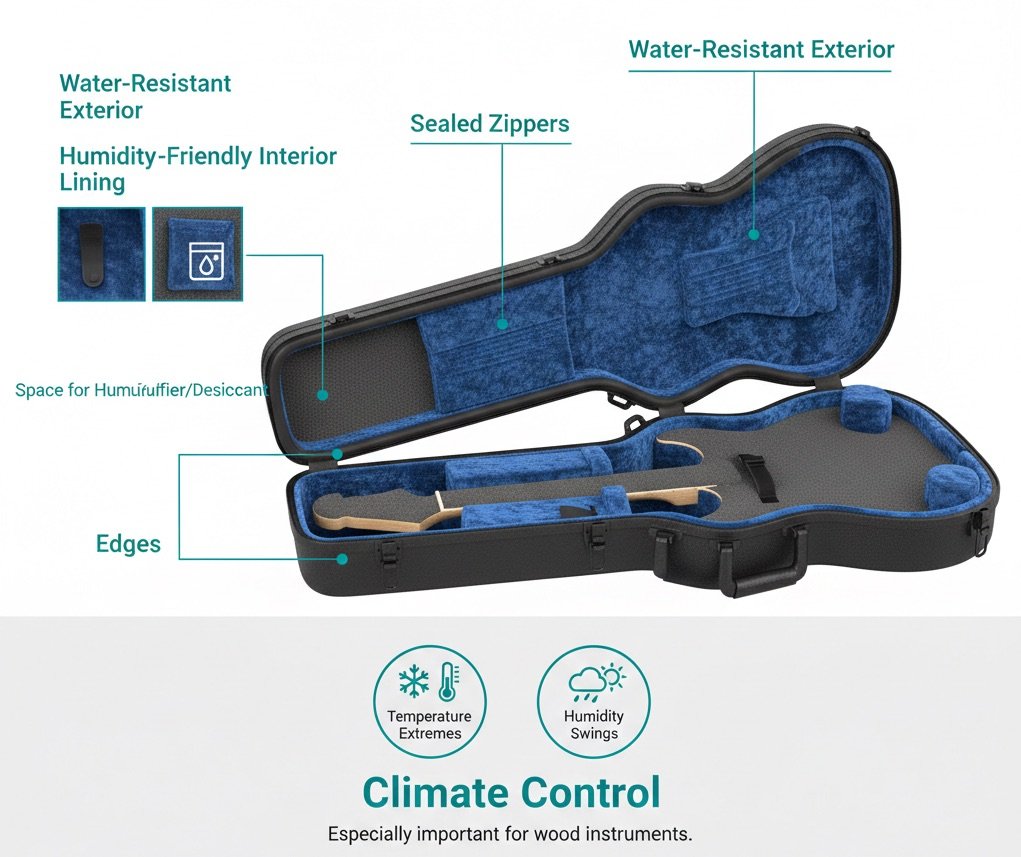
3. Climate Resistance
Travel exposes instruments to humidity, dryness, and temperature swings.
Look For
- water‑resistant exterior
- sealed zippers
- humidity‑friendly interior materials
- space for a humidifier or desiccant pack
Climate control is especially important for wood instruments.
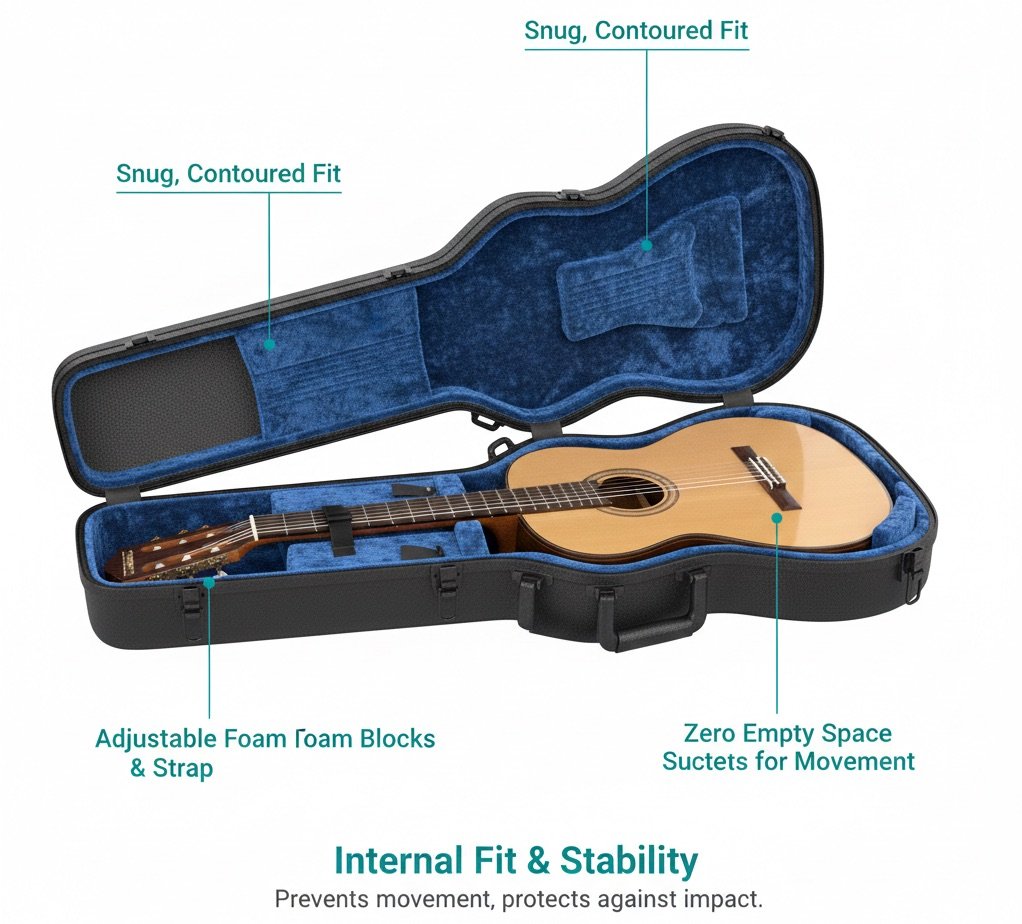
4. Internal Fit and Stability
A case should hold your instrument securely without squeezing it.
Look For
- snug but not tight fit
- adjustable internal padding
- neck cradles or straps
- no empty space for movement
Movement inside the case is one of the biggest causes of travel damage.
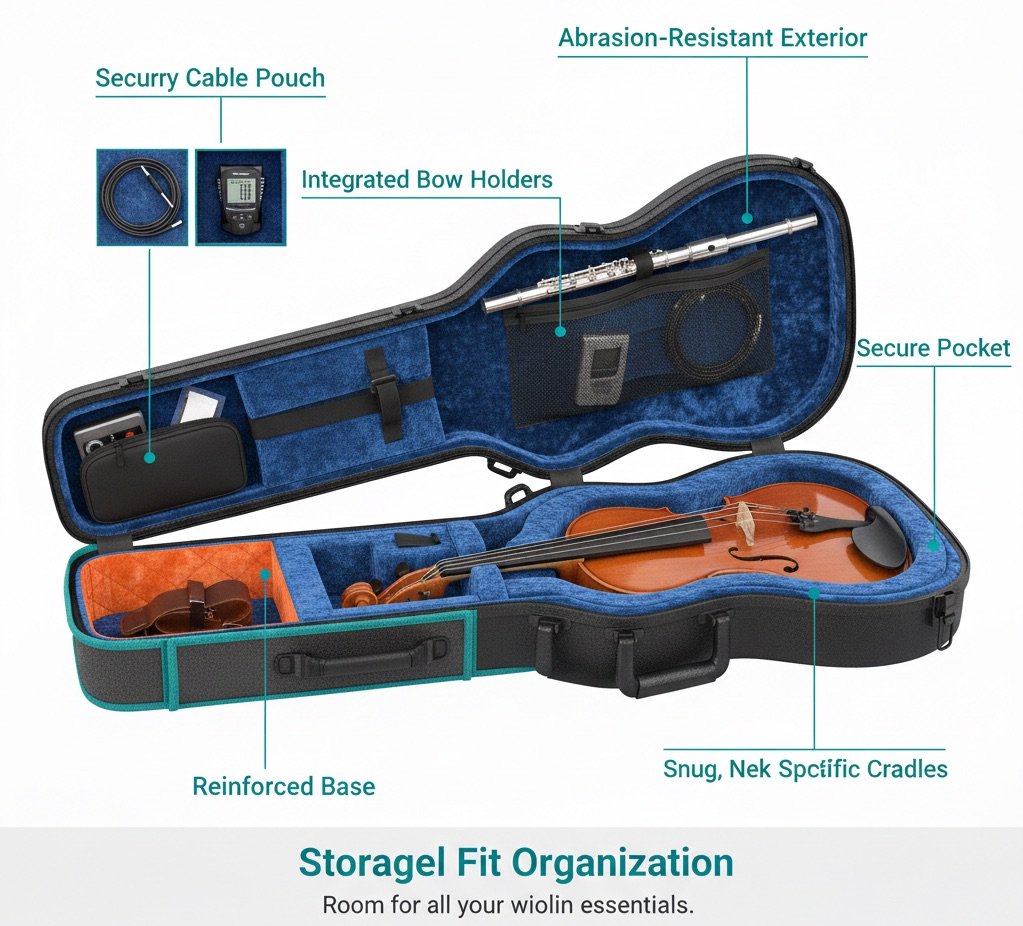
5. Storage and Organization
Traveling musicians often carry more than just the instrument.
Look For
- pockets for cables, tuners, straps, reeds, or small tools
- internal compartments
- secure zipper or buckle closures
- minimal bulk
Avoid cases with oversized pockets that encourage overpacking.
6. Durability and Build Quality
A travel case should last years, not months.
Look For
- reinforced stitching
- strong zippers
- durable handles
- abrasion‑resistant fabric
- solid hardware
Weak points become obvious only after a few trips — choose quality from the start.
7. Carrying Comfort
If you’re walking through airports, cities, or long stretches of road, comfort matters.
Look For
- padded backpack straps
- chest or waist straps for heavier instruments
- cushioned handles
- balanced weight distribution
A comfortable case makes travel feel effortless.
8. Size and Airline Compatibility
For air travel, size matters more than anything.
Look For
- cases that fit overhead bins
- slim profiles
- lightweight construction
- TSA‑friendly locks (for hard cases)
Oversized cases often require gate checks — a risk many musicians prefer to avoid.
9. Security Features
Protection isn’t just physical — it’s also about preventing loss or theft.
Look For
- lockable zippers
- hidden pockets
- reinforced attachment points
- subtle, non‑flashy design
A case that doesn’t draw attention is often the safest.
10. Your Travel Style
Ultimately, the best case depends on how you move through the world.
Ask Yourself
- Do I walk a lot?
- Do I fly often?
- Do I travel with multiple instruments?
- Do I need quick access to accessories?
- Do I prefer minimalism or full protection?
Your case should match your lifestyle, not the other way around.

 InternetMusicPlayer | ON THE GO
Creative Rituals for Traveling Musicians
Travel can be exhilarating — new places, new sounds, new rhythms. But it can also be disorienting. Your routines disappear, your environment shifts constantly, and your creative energy can scatter in a dozen directions.That’s why...
Frequently Asked Questions
What’s the best type of case for air travel?
A hard or hybrid case offers the best protection for flights.
Are soft cases safe for travel?
Yes — for daily movement, commuting, and short trips. Not ideal for flights.
Do I need a waterproof case?
Water‑resistant is usually enough, but humid climates may require more protection.
Should I buy a case specifically for travel?
If you travel often or carry your instrument daily, a dedicated travel case is worth it.
Can I use a cheap case for travel?
It’s risky — low‑quality cases fail at the worst possible moments.
How do I know if my instrument fits properly?
It should be snug, stable, and supported without pressure points.
Final Thoughts
A travel‑friendly instrument case is more than a protective shell — it’s a partner in your creative life. The right case keeps your instrument safe, your travel stress‑free, and your creativity intact no matter where you go. Whether you’re commuting across town or flying across continents, choosing a case with the right balance of protection, portability, and comfort ensures that your music travels with you, safely and effortlessly.